(source :: IMDEA Materials Institute (2024) ‘Researchers unveil groundbreaking new Digital Twin for precise real-time analysis of composite materials production’, IMDEA News, 11 March. Available at: https://materials.imdea.org/researchers-unveil-groundbreaking-new-digital-twin-for-precise-real-time-analysis-of-composite-materials-production/)
As we move into the second half of the decade, the concept of the Digital Twin (DT) has transitioned from an aspirational buzzword to a fundamental requirement for Tier-1 aerospace suppliers. A landmark 2025 study from the IMDEA Materials Institute and the TCS Future-Ready Skies Study highlighted that nearly 60% of aerospace leaders are now integrating digital twins to manage the inherent volatility of composite manufacturing.
The “Virtual Autoclave” and Defect Prediction
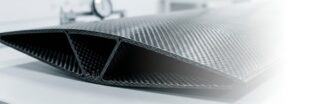
One of the most transformative applications we’ve seen in 2025 is the use of DTs to predict cure-induced deformations. When large-scale composite parts—such as wing spars or fuselage sections—undergo curing in an autoclave, they often suffer from “spring-in” or warpage due to uneven thermal gradients. Traditionally, this required multiple expensive physical prototypes and “tool compensation” adjustments.
The 2025 research indicates a major shift:
“The newly designed Digital Twin will allow manufacturers to see inside composite materials as they are being produced, facilitating early detection of faults… markedly decreasing waste, energy consumption, and production downtime.” (IMDEA, 2024; MDPI, 2025)
By simulating the thermo-chemical-mechanical coupled heat transfer process, manufacturers can now adjust the curing cycle in real-time. If a sensor detects a temperature overshoot, the Digital Twin calculates the impact on the final geometry in milliseconds and suggests an immediate corrective action.
Impact on Lifecycle and Sustainability
For my research at ISEC Lisboa, the “longevity” of a part is now inextricably linked to its digital birth certificate. Every part produced under a DT framework carries a high-fidelity digital counterpart that records its exact thermal history and any minor deviations during its layup.
As noted in the TCS 2025 Study:
“Digital twins… are the key enablers for transformation… reducing the time required to launch AI-enabled features by up to 60% and decreasing costs by approximately 15%.” (TCS, 2025)
This data is invaluable for the MRO (Maintenance, Repair, and Overhaul) sector. If a composite panel is damaged three years into its service life, engineers can refer back to its original Digital Twin to understand its unique internal stress state before beginning a repair. This “Digital Thread” ensures that the aircraft remains as safe and efficient as the day it was certified.
Conclusion for the Portuguese Cluster
In the context of the growing aerospace hub here in Portugal, the adoption of Digital Twin technology is no longer optional. It is the only way to meet the “Zero-Defect” standards demanded by global primes like Embraer and Airbus. As we refine these manufacturing protocols at ISEC, the goal is clear: to move from reactive quality control to a proactive, predictive model that defines the future of European aeronautics.