(MDPI (2025) ‘An Overview of Smart Composites for the Aerospace Sector’, Applied Sciences, 15(6), p. 2986.)
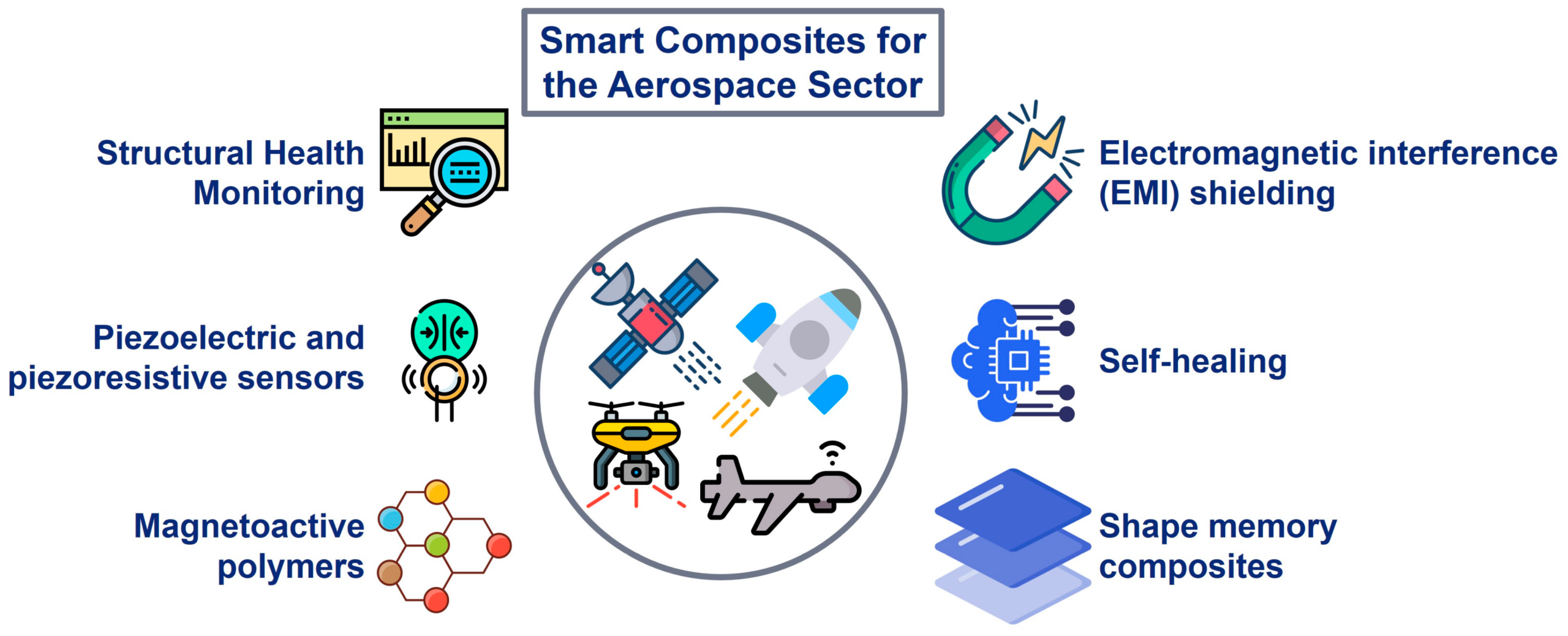
The transition from traditional carbon-fiber-reinforced polymers (CFRP) to “Smart” or “Multifunctional” composites represents one of the most significant leaps in aerospace engineering this decade. Traditionally, Structural Health Monitoring (SHM) relied on “parasitic” sensors—external devices bonded to the surface of a finished component. These added weight, created potential points of structural weakness, and often failed to capture internal delamination. However, as highlighted in the recent comprehensive review, “An Overview of Smart Composites for the Aerospace Sector” (MDPI, 2025), the industry has successfully moved toward In-Situ Sensing.
https://www.mdpi.com/2076-3417/15/6/2986
The Mechanics of Self-Sensing
The core of this innovation lies in the integration of thin-film piezoelectric sensors and carbon nanotube (CNT) networks directly into the composite layup during the infusion or AFP (Automated Fiber Placement) process. As the authors of the MDPI study note, the goal is to create a structure that functions similarly to a biological nervous system. They state:
“The integration of sensors within the composite layup allows for the continuous monitoring of the structural integrity throughout the entire life cycle of the component, from manufacturing to end-of-life.” (MDPI, 2025)
By embedding these sensors, we are no longer guessing where fatigue might occur. Instead, the material itself generates electrical signals in response to mechanical stress. This is particularly vital for detecting Barely Visible Impact Damage (BVID)—the “silent killer” of composites—where an internal delamination occurs without leaving a mark on the exterior surface.
Bridging the “Digital Twin” Gap
For my ongoing research at ISEC Lisboa, the most compelling aspect of this paper is the discussion on how SHM data feeds directly into the Digital Twin framework. A Digital Twin is only as good as the real-world data it receives; by utilizing embedded sensors, the digital model of a wing or fuselage can update in real-time based on actual flight loads rather than theoretical models.
The paper emphasizes this synergy, noting:
“Smart composites provide the high-fidelity data required to synchronize physical assets with their digital counterparts, enabling a shift from scheduled maintenance to condition-based maintenance (CBM).” (MDPI, 2025)
Industrial Implications: Best Practices for 2026
From an industrial perspective, especially considering the manufacturing standards we are evaluating in the Portuguese aerospace cluster, the move toward “Smart” composites necessitates a rewrite of the factory floor manual. We are no longer just handling materials; we are handling integrated circuits. This requires a higher level of technician training and cleaner “white room” environments to prevent sensor contamination during the layup.
Ultimately, this research confirms that the “Best Practice” of the future isn’t just about how strong a part is, but how “aware” it is. As we continue our work at ISEC, these findings provide the technical bedrock for defining how the next generation of European aircraft will be maintained and certified.